HAICu fossil identification
For my MSc in Applied IT, I am researching how AI can support fossil identification for citizen scientists and palaeontological experts. My focus is the interaction: helping people understand suggestions, recognise uncertainty and decide when to rely on AI. So far, I have reviewed literature and previous HAICu work, identified a research gap and outlined the next research steps.
Connect citizen contributions and expert knowledge
The Fossil Citizen Science project explores how people can collect, document and identify fossils found in the Netherlands. Photos and observations from citizen scientists can contribute useful information, while experts bring the knowledge needed to validate difficult or uncertain finds.
My part of HAICu focuses on UI/UX and human–AI interaction. I am exploring how an interface can guide people through identification, help them assess AI suggestions and support learning across different levels of fossil expertise.
Build a foundation in research
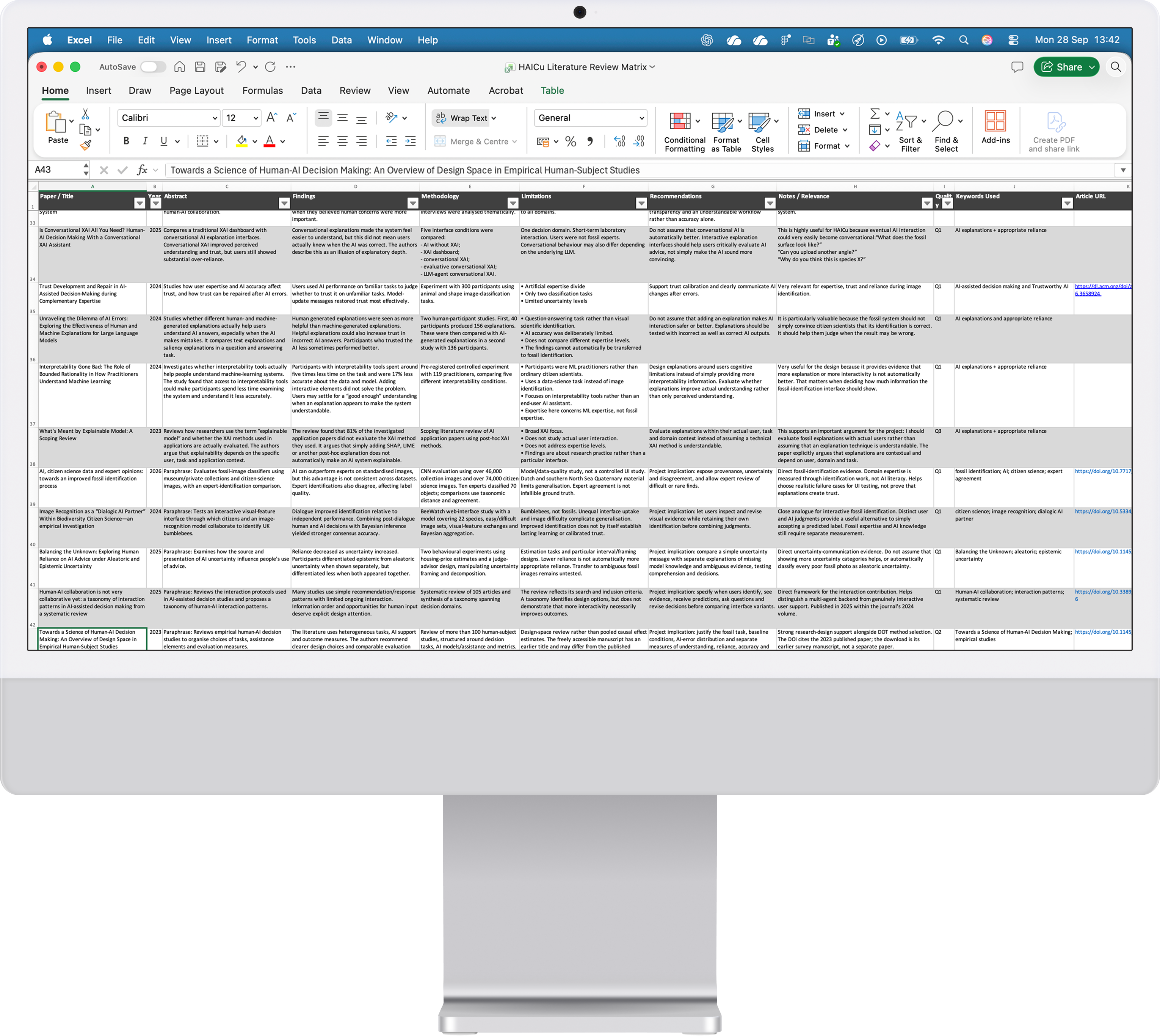
I have reviewed research on human–AI collaboration, AI-assisted decisions, explanations, uncertainty and user expertise. I organised the papers in a literature matrix, comparing findings, methods, limitations and relevance to fossil identification.
I also reviewed earlier HAICu work and brought the findings together in a background research document. This helped me move from a broad interest in trustworthy AI communication towards a more specific question about the information and guidance different users need.
 View full size
Help people assess the advice
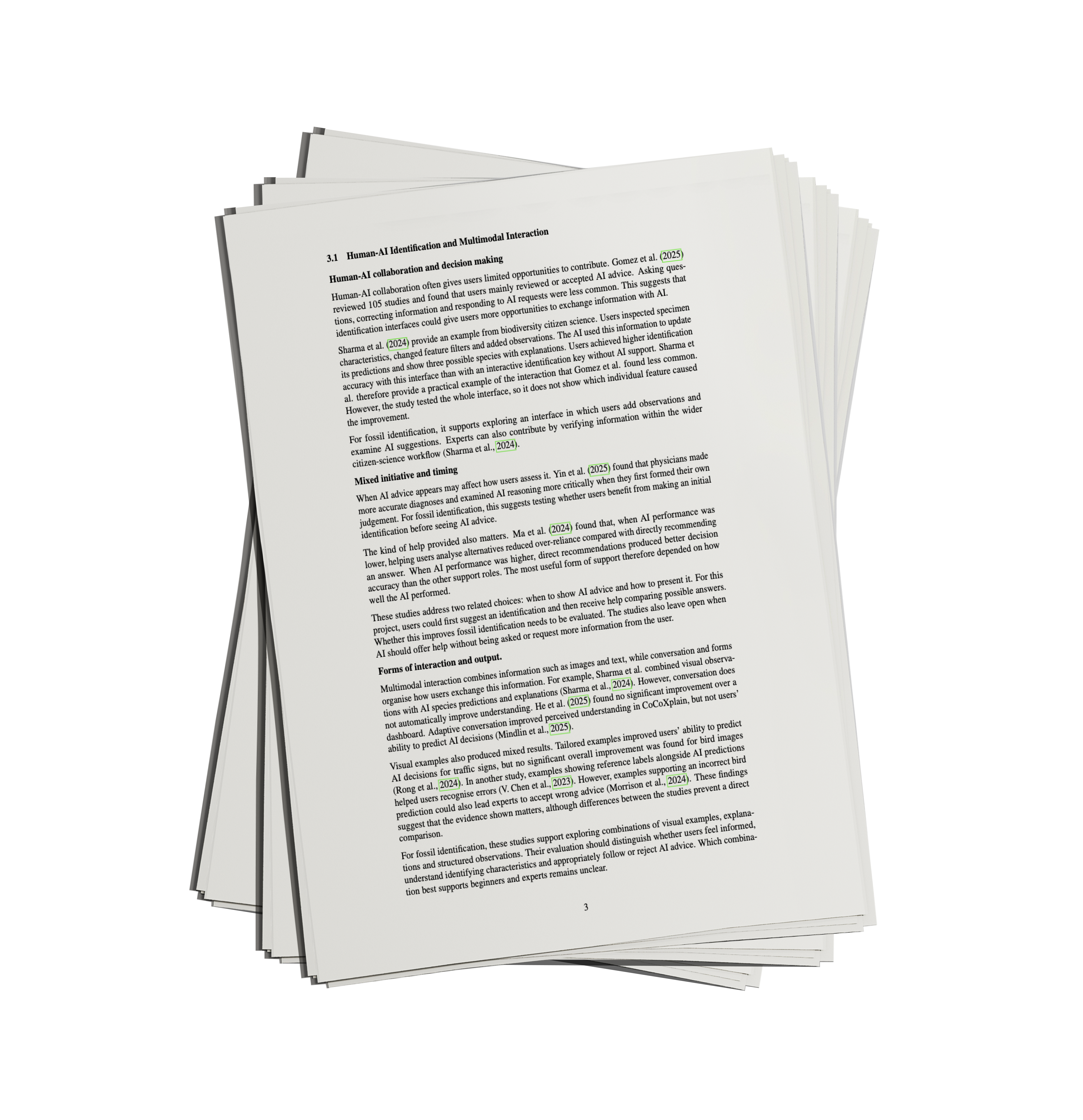
My review highlighted that explanations can help people accept correct AI advice, but do not automatically help them reject incorrect advice. Similarly, better performance with AI does not necessarily mean someone can identify fossils better independently afterwards.
Fossil condition, image quality, missing characteristics and disagreements between experts can all affect confidence in an identification. Beginners and experts may need different support to understand that uncertainty and check a suggestion.
Earlier HAICu research also compared forms and chat: forms were faster, while chat offered more natural guidance. Combining structured observations with visual information and conversation is a possible direction that still needs to be investigated.
 View full size
Explore which combination of support helps
The gap I identified concerns how visual information, structured observations and conversational explanations can work together for novice citizen scientists and palaeontological experts. I want to understand how these interactions affect both understanding and appropriate reliance on AI.
Appropriate reliance means accepting useful, correct advice while questioning or rejecting incorrect advice. The design challenge is to make the evidence and uncertainty understandable enough for people to make that judgement.
From research to interaction design
The project is still in progress. My next steps are to interview and observe beginners and experts during fossil identification tasks, exploring how they work, where they feel uncertain and what support they need.
I then plan to develop comparable interaction designs and evaluate how they support understanding and decisions. The exact formats will follow the research; a hybrid of structured input, visual explanations and guided conversation is one option.
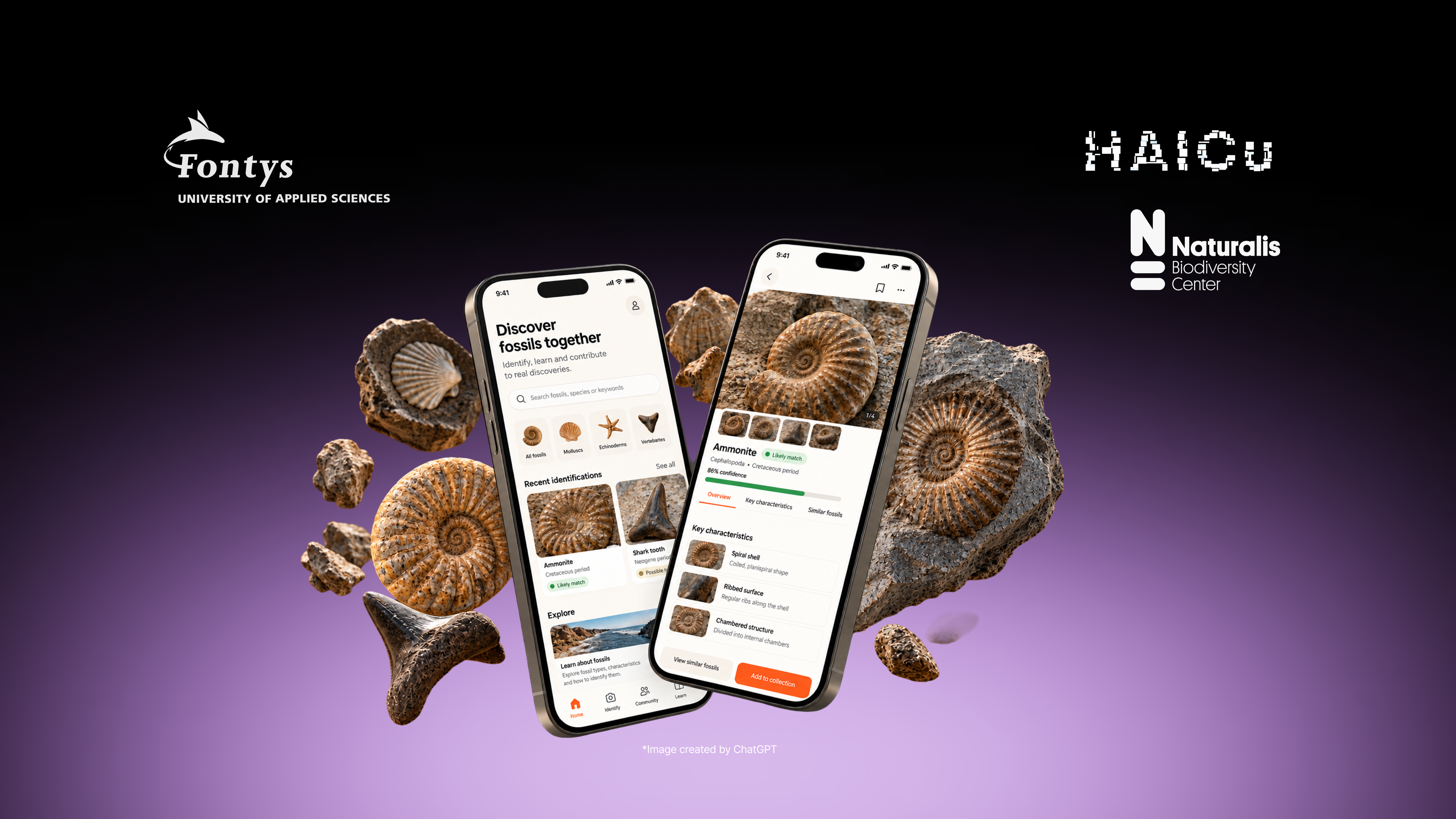
The current output is the research foundation and proposed study approach. The project visual illustrates a possible direction; the interaction prototype and evaluation are still to come. My scope is human–AI interaction design, rather than training a new identification model or building the complete HAICu platform.